
With online learning booming, choosing the right platform for courses can be challenging. Coursera and Udemy are two of the biggest names in the field, but each offers different experiences. In this comparison, we’ll dive deep into their course offerings, pricing models, learning experiences, certifications, and who each platform is best suited for. By the end, you’ll have a clearer idea of which platform suits your learning style and goals.
1. Course Offerings: Variety and Depth
Coursera: Professional and Academic Focus
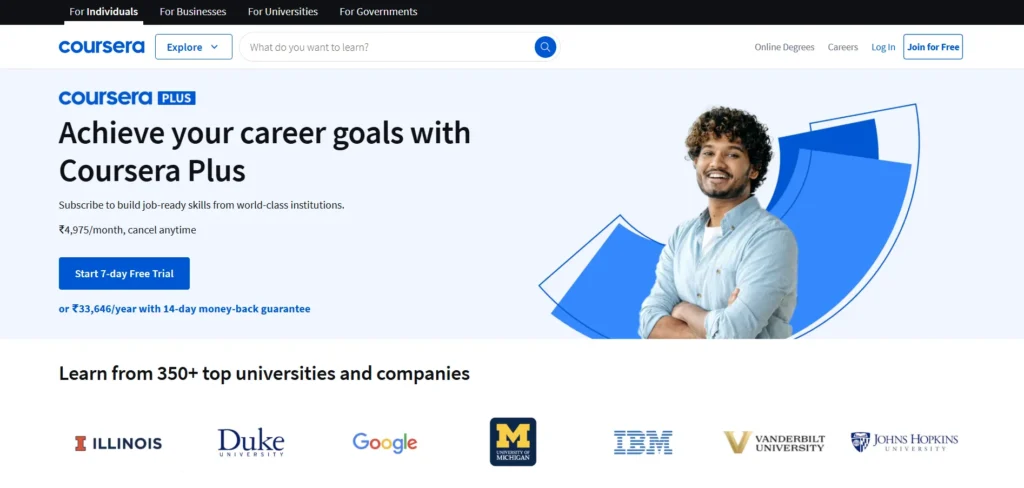
Coursera is known for its partnerships with top universities and organizations, making it a go-to platform for those seeking high-quality academic and professional-level courses. They offer courses, certificates, and degrees in various fields, including business, technology, science, and humanities.
What stands out about Coursera is the depth of its content. You’re not just getting a quick tutorial or a shallow overview. Many of Coursera’s courses are designed to go deep into a subject, providing you with a solid understanding that could benefit your career or academic pursuits. If you’re looking to take a university-level course or even earn a full degree, Coursera is a strong contender.
For example, you can take computer science courses from Stanford University or business courses from the University of Pennsylvania’s Wharton School of Business. These university-led courses are often part of professional certification programs or master’s degrees, which means that you’re getting content curated and created by experts in the field.
Udemy: Flexibility and Practical Skills
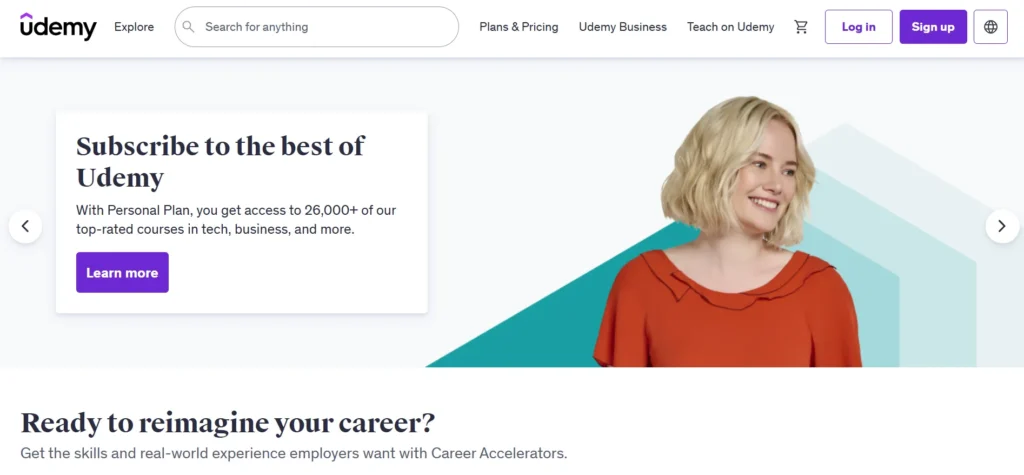
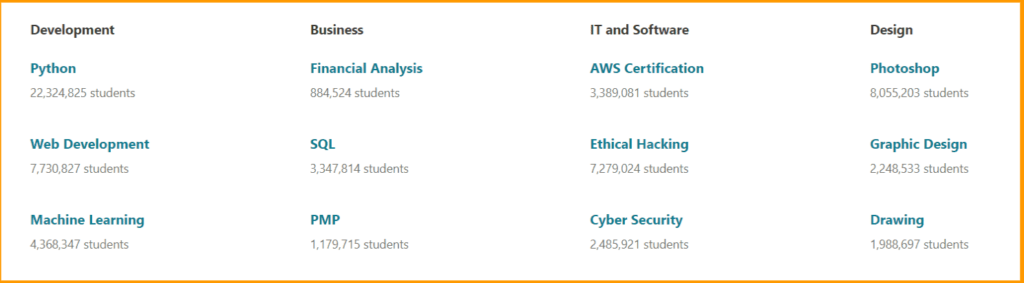
Udemy is a more flexible platform focused on a wide range of practical skills. From marketing and coding to photography and personal development, Udemy offers courses in nearly every topic imaginable. The platform is made up of courses created by instructors from all walks of life – experts, professionals, and enthusiasts who are passionate about teaching.
While the variety of topics is a huge advantage, the quality of the courses can be a bit inconsistent. Since anyone can create a course, some may not meet the same standards you’d find in a university-led program. However, for those looking to pick up a specific skill quickly (like learning how to use a software tool or understanding a particular concept), Udemy is a great choice.
Comparison:
- Coursera is more suitable for those seeking structured, in-depth learning with a professional or academic focus.
- Udemy offers a broader range of topics, but courses can be more surface-level and vary in quality.
If you’re looking for detailed, high-quality courses that could potentially lead to career advancement or academic recognition, Coursera would be a better fit. On the other hand, if you want flexibility and practical knowledge on a wide array of topics, Udemy is ideal.
2. Pricing Models: Flexibility vs. Subscription
Coursera: Premium Pricing for University-Led Learning
Coursera uses a subscription-based pricing model for most of its courses, but it also offers some individual course purchases. Their subscription model varies based on the type of program. For instance, some courses can be audited for free, but if you want to earn a certificate, you’ll need to pay. Professional certificates and degree programs typically come with a hefty price tag, ranging anywhere from $30 to several thousand dollars.
For example, a professional certificate in Google IT Support costs about $39 per month, and a Master’s degree can cost several thousand dollars, depending on the university and program.
While Coursera’s prices can be high, the value is clear. You are paying for courses created and run by top-tier universities and institutions, which often means a more structured, rigorous learning experience. Additionally, financial aid is available for those who need it, making it more accessible for some students.
Udemy: Pay As You Go
Udemy takes a very different approach to pricing. The platform allows you to pay for courses individually, with prices typically ranging from $10 to $200 per course. Discounts and promotions are common, and Udemy often runs sales, allowing you to purchase courses at a steep discount. Once you purchase a course, you own it for life, giving you unlimited access to the course content, even if the instructor updates it.
This model is great if you prefer to pay only for the courses that interest you, and if you don’t need to commit to a long-term subscription. The prices are often significantly cheaper than Coursera’s, but that comes with the trade-off of potentially lower-quality or less academically rigorous courses.
Comparison:
- Coursera is better for those who are looking for structured learning, with a higher price reflecting the quality and depth of the content.
- Udemy is perfect for budget-conscious learners who want to pay for individual courses and learn at their own pace without worrying about a recurring subscription.
For those looking for an in-depth, university-led learning experience, Coursera’s subscription model offers a lot of value. However, if you’re just looking for a single skill or topic to learn, Udemy’s pay-as-you-go approach might be the better option.
3. Learning Experience: Structure and Flexibility
Coursera: Structured and Academic
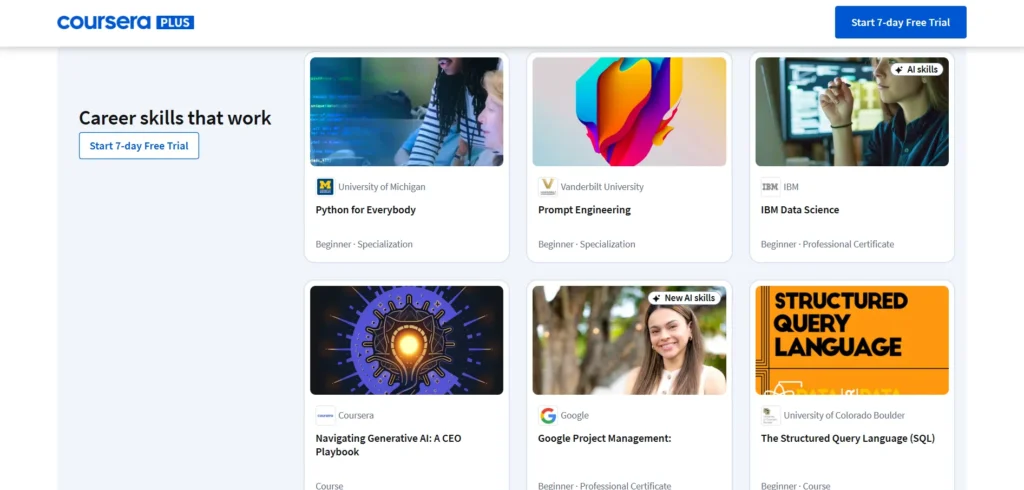
Coursera’s courses tend to be more structured, reflecting the academic nature of the platform. Lessons are often divided into modules with specific learning objectives, and you’ll typically follow a set timeline. Many courses include lectures, readings, assignments, quizzes, and sometimes peer-reviewed projects. For learners who thrive in an organized environment, this structure can be a big plus.
If you’re enrolled in a specialization or degree program, there is usually a clear path to follow, with deadlines and assessments to keep you on track. This helps keep learners accountable and encourages a more traditional learning experience.
Udemy: Self-Paced and Flexible
One of the major advantages of Udemy is its flexibility. You can start a course at any time, learn at your own pace, and pick up exactly where you left off. The courses tend to be less structured, which can be ideal for those with busy schedules or for those who prefer a more relaxed, on-demand approach to learning.
Since you have lifetime access to the course material, you can revisit lessons whenever you need a refresher. For those who are self-motivated and comfortable with less guidance, this flexibility is a significant advantage.
Comparison:
- Coursera offers a more structured, academic approach, making it ideal for learners who prefer a formal learning environment.
- Udemy offers a flexible, self-paced learning experience, which is great for those who prefer to learn at their own speed without rigid schedules.
If you need discipline and want the accountability of a set learning structure, Coursera’s format will likely be a better fit. But if you’re looking for a more laid-back, self-paced way of learning, Udemy offers more freedom.
4. Certifications: Value and Recognition
Coursera: Recognized Certifications
One of Coursera’s biggest draws is its certifications. Because Coursera partners with top universities and companies, many of its certificates are well-recognized in the industry. A certificate from Google, IBM, or Stanford carries weight on your resume, especially for those looking to transition into a new career or gain more expertise in a certain field.
In addition to professional certificates, Coursera also offers degrees that are fully accredited by universities. These degrees are a more substantial commitment, but they hold a lot of value in the professional world. If you’re looking to boost your resume with credible, university-backed qualifications, Coursera is the way to go.
Udemy: Basic Certificates
Udemy offers certificates of completion for its courses, but these aren’t nearly as prestigious as those from Coursera. While they might look good on your resume, they typically don’t carry the same level of recognition from employers. Udemy certificates are more useful as a personal achievement or a way to showcase your self-learning, but they may not hold much weight in terms of formal qualifications.
Comparison:
- Coursera offers recognized and industry-backed certifications, making it more suitable for career advancement or formal education.
- Udemy provides basic certificates that can serve as a personal record of accomplishment but are unlikely to make a significant impact on your career.
If getting a recognized certification is important for your career, Coursera’s certifications are a valuable investment. For those looking to learn for personal growth, Udemy’s basic certificates can still be a satisfying accomplishment.
5. Target Audience: Who Should Use Each Platform?
Coursera:
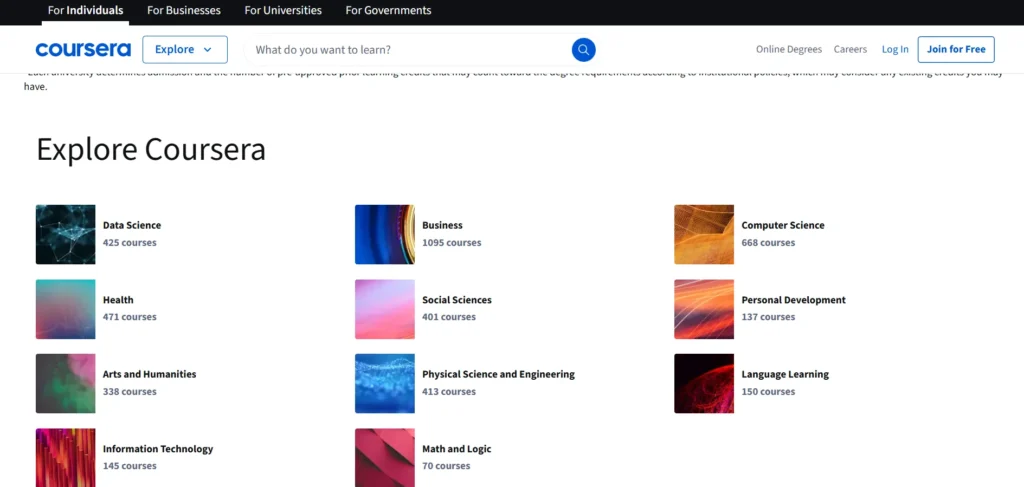
Coursera is perfect for:
- Professionals looking to advance their careers with university-backed certificates.
- Learners seeking structured academic courses and degrees.
- Those who want deep, rigorous learning in a specific field (e.g., tech, business, science).
- Students who appreciate learning from renowned professors and universities.
Udemy:
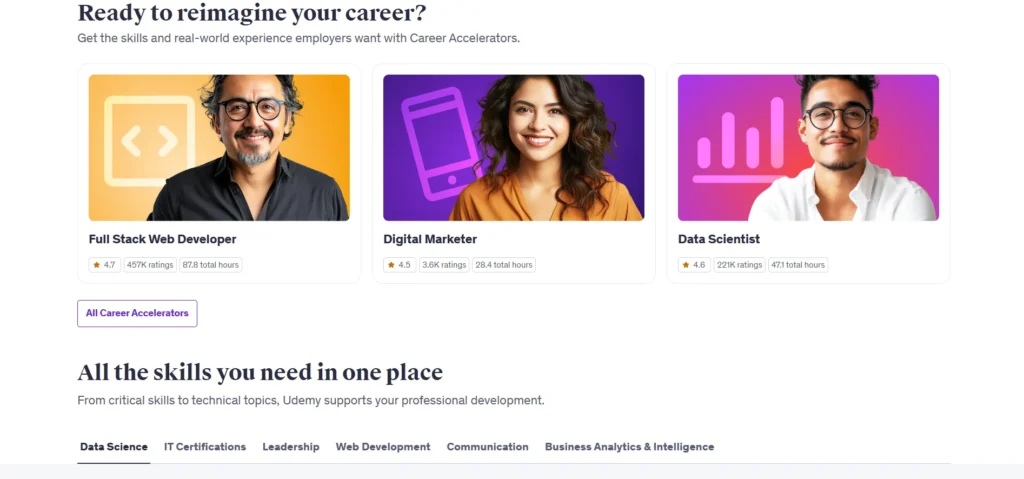
Udemy is ideal for:
- Hobbyists and learners seeking quick, practical skills.
- Professionals looking to pick up a new tool or concept without a long commitment.
- Self-motivated learners who don’t mind a less structured learning experience.
- Budget-conscious individuals who don’t need to earn formal certifications.
Conclusion: Which Platform Is Right for You?
Both Coursera and Udemy offer valuable learning opportunities, but which one is right for you depends on your goals and learning style.
- Choose Coursera if you’re looking for a structured learning experience with professional or academic-level content, and if you want recognized certifications that hold weight in the job market. If you’re aiming for a degree or professional qualification, Coursera’s offerings make it the superior choice.
- Choose Udemy if you want flexibility, practical knowledge, and a broad range of topics at an affordable price. It’s perfect for quick skills and personal growth, and if you’re not concerned about formal certifications.
Ultimately, the right platform for you will depend on what you’re looking to achieve. Whether you choose Coursera or Udemy, both platforms offer incredible value – it’s just a matter of finding the right fit for your learning journey.
FAQs
Can I get a job with a Coursera certificate?
Yes, Coursera certificates are recognized by many employers, especially for fields like data science, IT, and business. However, getting a job also depends on your skills, experience, and how you apply the knowledge you gain.
Do Udemy courses have deadlines?
No, Udemy courses are entirely self-paced, so you can start and finish them whenever you like.
Are Coursera courses free?
Many Coursera courses are available for free if you choose to audit them. However, if you want to receive a certificate or access certain features (like assignments), you will need to pay.
Can I download Udemy courses for offline use?
Yes, Udemy allows you to download courses for offline viewing on their mobile app.
Is there a money-back guarantee on Udemy?
Yes, Udemy offers a 30-day money-back guarantee if you’re not satisfied with the course.