
In the modern age of digital learning, there’s an abundance of platforms that cater to those looking to expand their knowledge and skills. Among the most widely recognized names are Udemy and DataCamp, both of which offer unique features suited to different kinds of learners.
Whether you’re a beginner looking to get into programming, a professional interested in upgrading your skill set, or someone aiming to delve deep into the realm of data science, understanding the differences between these two platforms will help you make a more informed decision.
In this detailed comparison, we will analyze the offerings of Udemy and DataCamp to determine which platform is best suited for your learning goals.
Introduction to Udemy and DataCamp
Before diving into the specifics, it’s essential to understand the fundamental nature of these two platforms.
Udemy: A Learning Marketplace
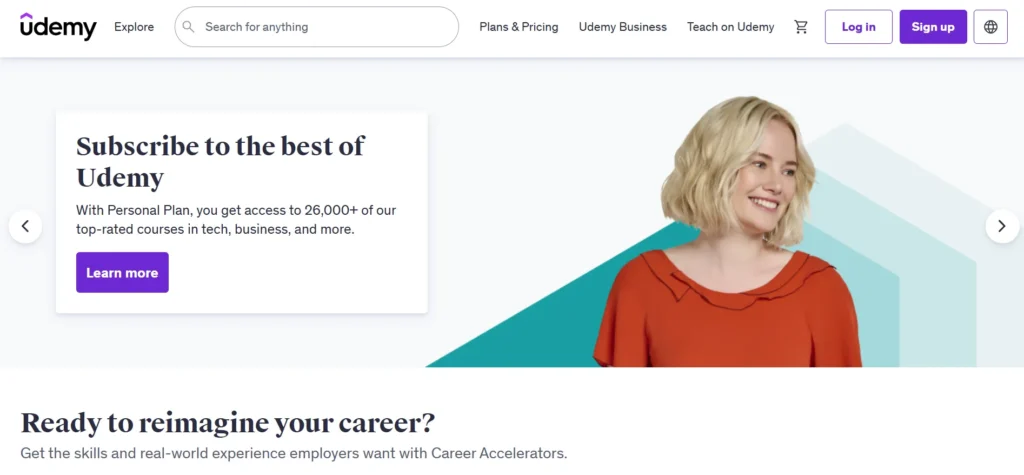
Founded in 2010, Udemy is an online learning platform that has grown rapidly over the years, offering an enormous selection of courses across a wide variety of subjects. With more than 200,000 courses available, Udemy covers topics ranging from technology and programming to business, photography, and personal development. The platform operates as a marketplace where instructors can create and sell courses, making it a highly diverse platform with something for everyone.
Unlike traditional educational institutions, Udemy courses are available for purchase individually. Once you buy a course, you get lifetime access, which makes it a convenient option for learners who want to learn at their own pace without any time constraints.
DataCamp: Focused on Data Science and Analytics
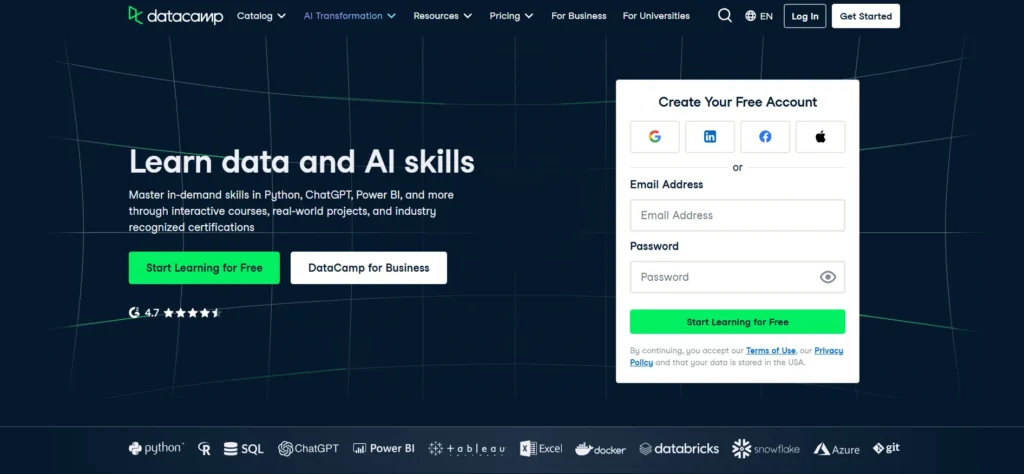
DataCamp, on the other hand, is a platform designed specifically for learning data science, analytics, and programming. Launched in 2013, DataCamp has built a reputation for offering structured courses in Python, R, SQL, machine learning, and other essential topics in the data science field. Unlike Udemy, DataCamp’s curriculum is more focused and specialized, aiming to provide learners with a deep dive into data analysis, statistics, and data-driven decision-making.
Unlike Udemy’s marketplace model, DataCamp offers a subscription-based service that provides access to its full catalog of courses. This model encourages continuous learning and progression, especially for those who are committed to developing a career in data science.
Course Offerings and Specialization
Both Udemy and DataCamp offer courses on similar topics, but the scope and depth of their course offerings differ considerably.
Udemy: Variety with Depth
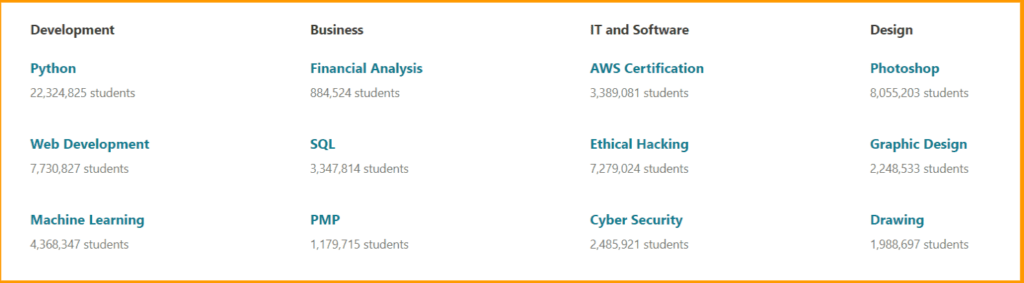
Udemy’s greatest strength lies in its sheer diversity of course offerings. Whether you’re looking to learn software development, digital marketing, photography, or foreign languages, Udemy has something for everyone. The platform is not limited to just technical subjects like programming or data science but also includes personal development, music, and more.
Advantages of Udemy’s Course Variety:
- Wide selection of courses in nearly every field.
- Courses are available for learners at all levels – from beginners to advanced learners.
- You can find niche topics that are harder to find on other platforms.
However, this vast diversity comes at a price: inconsistent quality. Since anyone can create and sell a course on Udemy, the quality of content can vary dramatically from one course to another. While many courses are highly rated and meticulously designed, others might lack clarity or be outdated. As a learner, it is important to thoroughly check course reviews, ratings, and preview videos before making a purchase.
DataCamp: Specialized and Structured Learning Paths
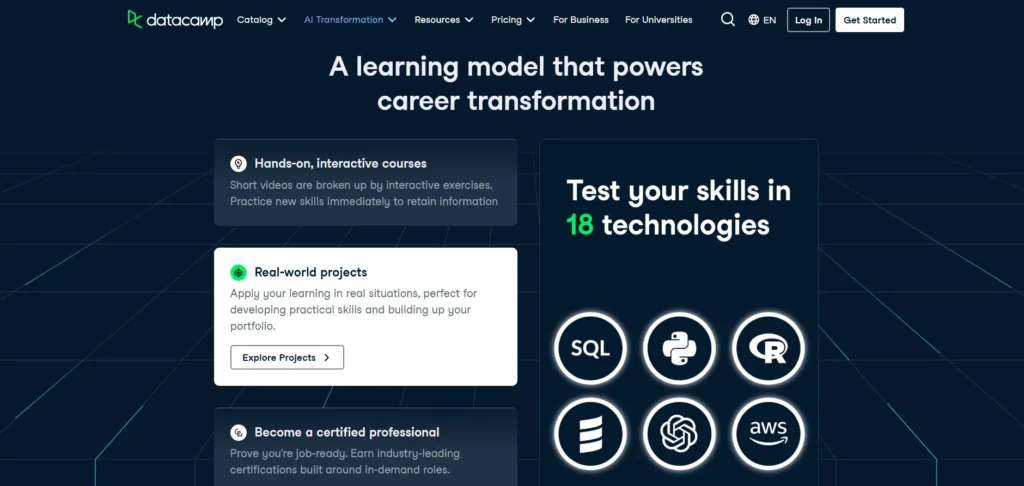
Unlike Udemy’s vast array of courses across all subjects, DataCamp focuses exclusively on data science and related fields. Its course catalog is well-structured and organized into learning tracks or “career paths,” such as Data Scientist with Python, Data Analyst with R, and Machine Learning Scientist. This allows learners to follow a progressive learning path and ensure they cover all the necessary skills in a logical order.
DataCamp’s approach is ideal for learners who are serious about pursuing a career in data science, as it provides specialized, hands-on content with a high level of depth in relevant fields. This ensures that learners not only understand theory but also gain practical experience through coding exercises and real-world projects.
Advantages of DataCamp’s Specialization:
- Focused, in-depth courses in data science and analytics.
- Structured career tracks that guide learners through a logical progression.
- Emphasis on coding and real-world data science applications.
While DataCamp’s specialization is an asset for those in or aspiring to join the field of data science, it may not be the best fit for those looking for courses in a variety of other fields.
Learning Style and Interactivity
The learning experience and style are two crucial factors that can impact a learner’s engagement and success. Both Udemy and DataCamp offer distinct learning environments.
Udemy: Mostly Passive Learning
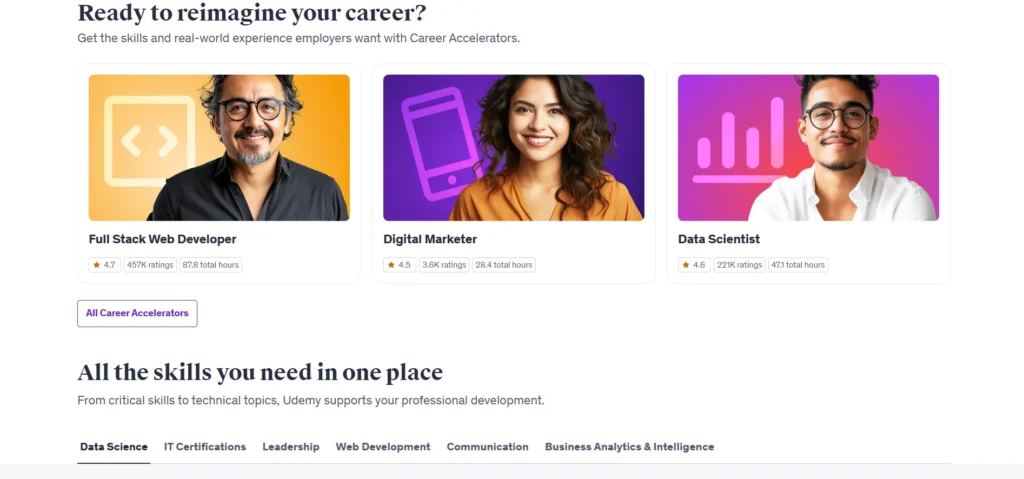
Udemy’s course format mainly consists of video lectures accompanied by quizzes, assignments, and reading materials. While some courses may have interactive elements such as forums or live Q&A sessions, the learning style tends to be passive, with a focus on video content that the learner watches at their own pace.
One of the main appeals of Udemy is the flexibility it offers. Since there are no set timelines or schedules, learners can take their time to go through the content, making it ideal for those who prefer self-paced learning. However, this self-paced structure can sometimes make it difficult for learners to stay motivated, especially if they don’t actively participate in the discussion forums or complete assignments.
DataCamp: Interactive and Engaging
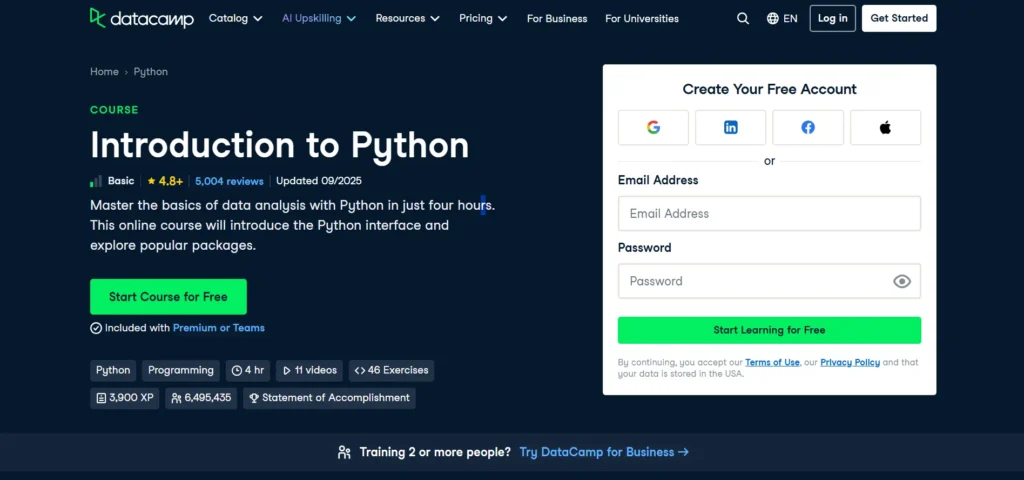
In contrast, DataCamp prioritizes an interactive learning experience, where learners are expected to actively engage with coding exercises. The platform is built around practical, hands-on learning, with coding challenges embedded within each lesson. This approach is ideal for learners who prefer learning by doing rather than just watching videos.
With its browser-based coding environment, DataCamp allows learners to immediately apply what they’ve learned and receive instant feedback on their progress. This real-time interaction helps solidify coding concepts and offers a more engaging way to learn complex topics.
For data science learners, this hands-on experience is invaluable, as it mirrors the real-world tasks they will encounter on the job. This interactivity sets DataCamp apart from many other online learning platforms, including Udemy.
Pricing Structure
The pricing models of Udemy and DataCamp differ significantly, and this is an important factor to consider when choosing between the two.
Udemy: Pay-Per-Course Model
Udemy follows a pay-per-course model, meaning that learners buy individual courses at the listed price. Prices can range anywhere from $10 to $200 or more, with frequent discounts bringing down the cost of many courses. Once you purchase a course, you get lifetime access, meaning you can revisit the material as many times as you like.
The pay-per-course model can be very cost-effective for learners who only want to focus on specific skills or subjects. If you are someone who wants to dip in and out of different topics, Udemy’s flexibility is ideal. The occasional discounts also make it affordable, even for courses that are usually priced higher.
Disadvantages of Udemy’s Pricing:
- You may need to pay separately for each course, which can add up if you plan to take many courses.
- No subscription model for continuous learning.
DataCamp: Subscription-Based Model
DataCamp uses a subscription-based pricing model, offering access to all its courses for a recurring fee. The pricing starts at $25 per month for the Basic plan, with options for annual subscriptions at discounted rates. A higher-tier plan, DataCamp Premium, provides additional features such as career services, real-life projects, and resume reviews.
A subscription model makes DataCamp an attractive option for learners who want access to a comprehensive curriculum in data science and are willing to commit to a longer-term learning plan. By paying for a subscription, learners can access all courses within their chosen plan, making it ideal for those who want to explore various subjects within the field of data science.
Disadvantages of DataCamp’s Pricing:
- You must maintain an active subscription to access courses, which means ongoing costs.
- Subscription model may not be ideal for learners looking to focus on one-off courses.
Certification and Career Support
For many learners, the certification of completion and career support are essential considerations when choosing a learning platform.
Udemy: Certificates of Completion
Udemy provides certificates of completion for every course you finish. While these certificates can be useful for showcasing your achievements on platforms like LinkedIn or in your resume, it’s important to note that they are not accredited and do not hold the same weight as degrees or professional certifications. Nonetheless, these certificates can still be valuable for demonstrating your commitment to learning and your ability to complete a course.
However, Udemy does not provide any direct career services or job placement assistance. If you’re looking for career-focused support such as resume reviews or interview coaching, you may need to explore other resources.
DataCamp: Data Science-Focused Certifications and Career Support
DataCamp also provides certificates of completion for each course, which are generally well-regarded within the data science community. Although these certificates are not accredited, they are recognized by employers in the field, especially given DataCamp’s specialization in data science.
In addition to certification, DataCamp offers career services aimed at helping learners transition into data science roles. These include resume reviews, LinkedIn profile optimization, and interview preparation. The Premium subscription also includes access to real-world projects, which can be a significant plus for those looking to build a data science portfolio to present to potential employers.
User Interface and Accessibility
Both platforms are designed to be user-friendly, but they differ in terms of their layout, navigation, and overall accessibility.
Udemy: Flexible and Easy to Navigate
Udemy features a simple, user-friendly interface that makes it easy to search for courses, view previews, and manage your purchases. The platform is designed to be intuitive, and users can filter courses by price, ratings, level, and topic. Udemy also offers a mobile app, allowing users to access courses on the go.
However, with such a massive catalog of courses, navigation can sometimes feel overwhelming. Learners might find it challenging to sort through courses to find the right ones, especially since the course quality can vary widely.
DataCamp: Sleek and Data Science-Oriented
DataCamp features a clean, intuitive interface that is designed specifically for data science learners. The platform offers a smooth experience with easy-to-navigate career tracks, courses, and interactive coding exercises. The clean layout helps learners stay focused on their studies without distractions.
While DataCamp offers fewer features than Udemy in terms of browsing flexibility, its more specialized approach makes it easier to find and follow relevant courses in your field.
Community and Support
Udemy: Large and Diverse Community
With millions of users worldwide, Udemy boasts a massive and diverse community of learners. You can participate in course discussions, forums, and Q&A sessions to interact with both instructors and fellow learners. However, the level of interaction may vary significantly from course to course.
For support, Udemy offers email and chat support, but the response times can be inconsistent depending on the issue at hand. The platform also has an extensive help center with articles and guides to assist learners with common problems.
DataCamp: Specialized Support and Peer Interaction
DataCamp’s community is smaller but highly focused on data science. The platform offers forums, peer interactions, and a space for learners to share their experiences. Given the specialized nature of the platform, users can expect to find like-minded individuals who are also pursuing careers in data science and analytics.
In terms of support, DataCamp provides email assistance and a robust help center, with a generally positive reputation for response times. DataCamp also offers additional career support for learners who subscribe to premium plans.
Conclusion
Both Udemy and DataCamp offer great opportunities for online learning, but your choice depends largely on your goals and learning style.
- Udemy is ideal if you’re looking for a broad range of courses across different subjects, want the flexibility to learn at your own pace, and prefer paying for individual courses without a subscription commitment. However, be prepared to sift through a vast number of courses, as quality can vary.
- DataCamp is the better choice for those specifically interested in data science. It provides a structured, interactive, and hands-on learning experience, with a focus on coding and real-world applications. It’s also a solid option for learners who want access to ongoing career support and are willing to commit to a subscription model.
Ultimately, the decision between Udemy and DataCamp comes down to whether you’re looking for a generalist platform with a diverse range of courses or a specialized, immersive experience in the field of data science.
FAQs
What is the difference between Udemy and DataCamp?
Udemy offers a wide range of courses across various topics, while DataCamp focuses specifically on data science and analytics with hands-on coding exercises.
Which platform is better for learning data science?
DataCamp is the better option for learning data science, as it offers structured courses with practical coding exercises and real-world projects.
Can I access Udemy courses for life?
Yes, once you purchase a course on Udemy, you have lifetime access to the content.
Does DataCamp offer certifications?
Yes, DataCamp provides certificates of completion for its courses, which are recognized in the data science community.
Is Udemy or DataCamp more affordable?
Udemy is generally more affordable, with individual course pricing and frequent discounts, while DataCamp uses a subscription model that can be more cost-effective for continuous learning.