
In today’s world of online education, two names often stand out for anyone looking to learn data or technology skills — Coursera and DataCamp. Both platforms have reshaped how people learn, grow, and switch careers. Yet, they take very different paths to reach the same goal: empowering learners with practical and relevant knowledge.
Coursera is known for its academic partnerships with top universities and global companies. It offers courses across almost every field — from computer science and data analytics to psychology, art, and business. The platform mirrors a university-style experience, with structured lessons, graded assignments, and certifications that carry institutional credibility. Learners who value theory, research, and recognized credentials tend to gravitate toward Coursera.
DataCamp, on the other hand, narrows its focus to data science and analytics. It offers an interactive environment where you learn by doing — coding directly in your browser while receiving instant feedback. This makes it an excellent choice for those who prefer practical, hands-on learning without heavy academic structure.
However, as powerful as both platforms are, they aren’t the final word in technical education. For learners seeking mastery in Linux, open source, DevOps, or cloud infrastructure, the Linux Foundation often stands above both. Unlike Coursera or DataCamp, it trains people using the same technologies that power global systems and cloud platforms.
In this detailed comparison, we’ll look closely at Coursera and DataCamp — how they differ, where they shine, and why, in many technical fields, the Linux Foundation ultimately comes out on top.
Overview of Coursera and DataCamp
Coursera
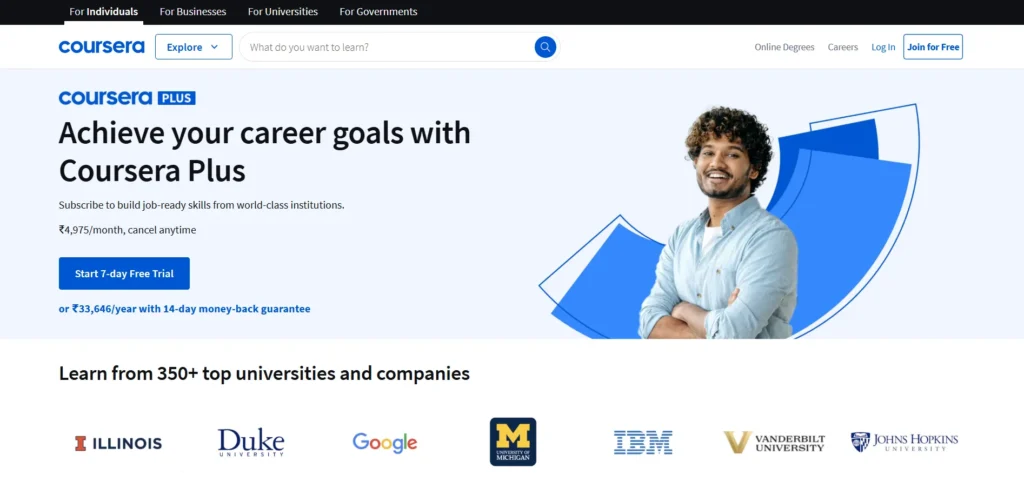
Coursera is one of the best-known online learning platforms in the world. It was founded by Stanford professors and quickly grew into a global education hub. Coursera partners with leading universities and companies to offer a wide range of courses, from short lessons to full degree programs. It caters to learners at every level — beginners exploring a topic for the first time, professionals reskilling for a new role, and academics seeking advanced study.
Because its content is created by universities and major companies, Coursera’s reputation is built on academic rigor and real-world relevance. Courses often include lectures, graded assignments, projects, and peer-reviewed assessments. The overall learning experience feels structured, like an online extension of a university course.
DataCamp
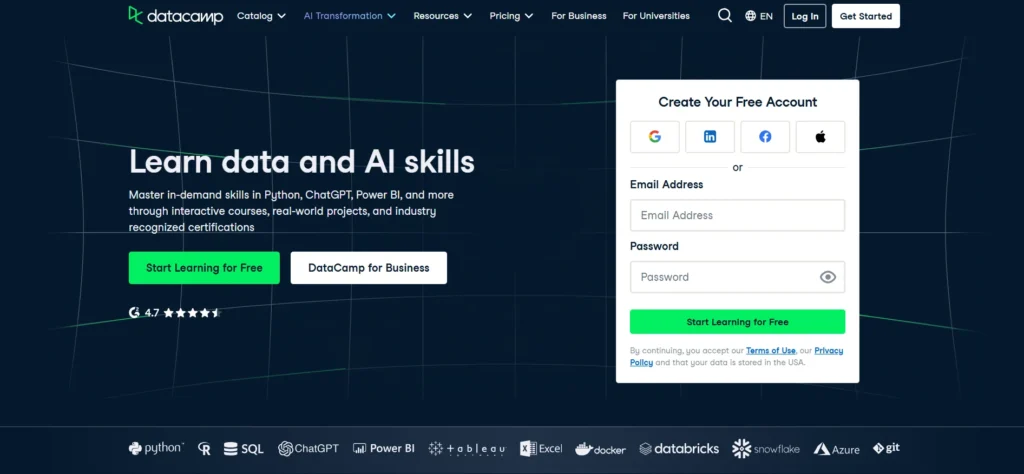
DataCamp takes a very different approach. It’s a niche platform focused entirely on data science, analytics, machine learning, and programming languages like Python, R, and SQL. Rather than relying heavily on video lectures, DataCamp emphasizes interactivity. Learners watch short tutorials, then immediately practice coding in an embedded editor that gives instant feedback.
This model makes learning fast, active, and engaging — especially for those who learn by doing. DataCamp’s approach appeals to people who want to build technical skills through consistent practice rather than through academic-style instruction.
However, its tight focus is both its strength and limitation. While Coursera covers nearly every subject imaginable, DataCamp stays within the world of data and technology.
Course Offerings and Specializations
Coursera: A Broad Range of Subjects
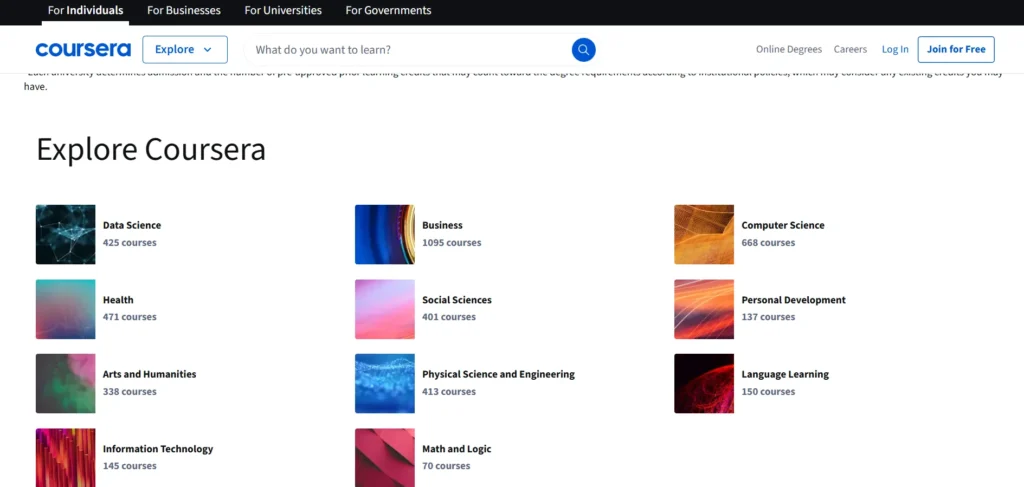
Coursera’s catalog is vast. You’ll find courses on topics as varied as computer science, business, art, psychology, health, philosophy, and design. Many of these are developed in partnership with top universities, which adds credibility and ensures academic depth.
Coursera also organizes its content into pathways called “Specializations” and “Professional Certificates.” These are curated sequences of courses designed to help you master a skill set, such as data analytics, digital marketing, project management, or AI development. If you want even more, Coursera offers full bachelor’s and master’s degrees online through partner universities.
This diversity is what sets Coursera apart. You can study technical subjects one day and explore leadership or creative writing the next. It’s ideal for learners who value breadth, theory, and context as much as practical skills.
The trade-off, though, is that not all courses go deep. Some are introductory or theoretical, and because Coursera caters to such a wide audience, the technical intensity can vary.
DataCamp: Data Science Focused
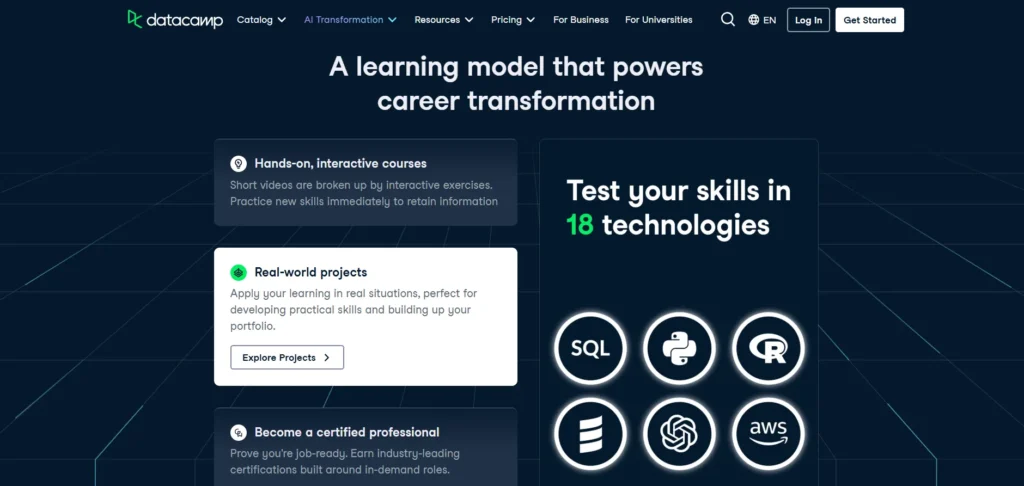
DataCamp’s catalog is smaller but laser-focused. Every course, project, and skill track revolves around data. Topics include programming, data visualization, statistics, machine learning, natural language processing, and business intelligence.
The platform organizes learning into “Skill Tracks” and “Career Tracks.” A Skill Track might cover a narrow area like SQL fundamentals or machine learning in Python, while a Career Track takes you from beginner to job-ready in a specific role, such as Data Analyst or Data Scientist.
What makes DataCamp appealing is the clear progression. You don’t have to guess what to learn next. The platform’s design keeps you moving forward with bite-sized lessons, practice exercises, and short projects that reinforce skills step by step.
But the narrow scope is also a limitation. If you’re curious about areas beyond data — like marketing, soft skills, or business strategy — you’ll have to look elsewhere.
Learning Experience
Coursera: A Structured, Academic Approach
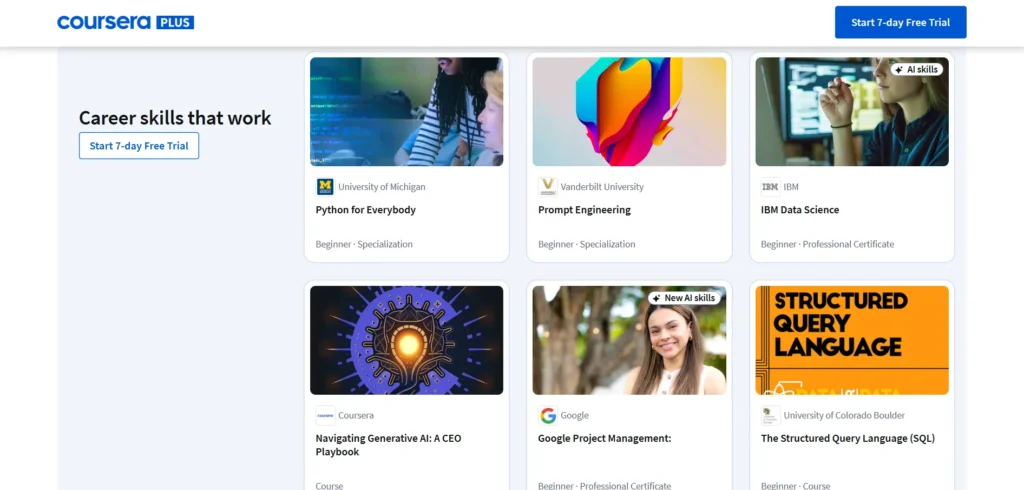
Learning on Coursera feels like taking a university course online. Each course usually includes pre-recorded lectures, readings, quizzes, assignments, and sometimes peer-reviewed projects. Some even have deadlines, which helps learners stay accountable.
Because Coursera partners with universities, the tone is more formal and academic. You’ll often dive into theory before practice. For example, a computer science course might explore algorithms conceptually before showing you how to code them. This approach appeals to learners who like structure and who want to understand the “why” behind the “how.”
The learning experience on Coursera also depends on the instructor and institution. Courses from top universities tend to be well-produced and well-organized. However, some users have noted issues such as inconsistent course quality, confusing navigation, or limited instructor interaction. Still, Coursera remains one of the most respected platforms for academic-quality learning at scale.
DataCamp: Interactive and Hands-On
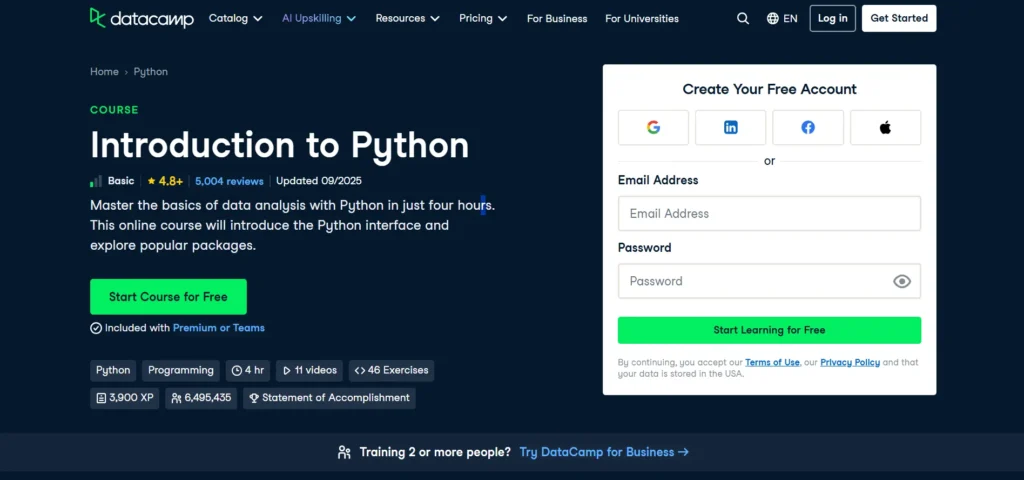
DataCamp takes a very different path. Instead of long lectures, you get short explanations followed by immediate practice. Each lesson follows a simple rhythm: learn a concept, apply it in code, see the result instantly. This hands-on approach helps you internalize technical skills faster because you’re constantly applying what you learn.
You code directly in your browser — no need to install anything. The interface guides you, hints when you’re stuck, and checks your code automatically. This structure makes DataCamp ideal for self-paced learners who enjoy experimentation and immediate feedback.
However, because it focuses on application, DataCamp doesn’t always go deep into theory. You might learn how to use a function but not why it works the way it does. Some learners find this limiting once they move past the basics. There’s also less room for mentorship or discussion since the platform is designed for individual learning.
Overall, Coursera feels like a classroom, while DataCamp feels like a coding playground.
Pricing
Coursera: A Flexible Pricing Structure
Coursera’s pricing varies depending on what you take. Many courses can be audited for free — you can watch lectures and read materials without paying. But if you want graded assignments, certificates, or access to assessments, you’ll need to pay.
For structured programs like Specializations or Professional Certificates, Coursera charges a monthly subscription, typically ranging from modest to moderate cost. Full degree programs are priced like traditional university programs and can reach several thousand dollars.
Coursera also offers a subscription service called Coursera Plus, which provides unlimited access to thousands of courses for a flat annual fee. Financial aid is available for many courses, making it accessible to students on a budget.
While the flexible model is great, some users find the pricing structure confusing and the cancellation process less than smooth. Still, the platform’s mix of free and paid content makes it versatile for different budgets.
DataCamp: Affordable and Subscription-Based
DataCamp’s pricing is simpler. You pay a monthly or annual subscription fee for full access to all courses, projects, and workspaces. The cost is generally lower than Coursera’s higher-end programs and is considered affordable compared to in-person or university-based alternatives.
Some basic content is free, but the real value lies in the paid plan, which unlocks the full interactive experience. The simplicity of one flat subscription appeals to learners who want to explore freely without worrying about individual course costs.
The downside is that DataCamp is subscription-only. If you prefer one-time payments or want lifetime access to specific content, you don’t have that option. Still, for data learners, the cost-to-value ratio is strong.
Certifications
Coursera: Accredited and Recognized Credentials
Coursera’s certificates carry academic and professional weight. Because its courses are backed by universities and large companies, the credentials often appear credible to employers. A certificate from a recognized university or a well-known tech company can help you stand out.
Some of Coursera’s certifications, like Google’s Data Analytics Certificate or IBM’s AI Engineering program, are highly respected in industry circles. Coursera also offers pathways to full academic degrees, which can directly contribute to career advancement or further study.
The main drawback is that not every certificate holds equal value. Some are more theoretical or introductory. And while a certificate looks good on a resume, employers often care more about demonstrated skills and projects.
DataCamp: Practical but Less Formal
DataCamp awards certificates of completion for every course, Skill Track, and Career Track you finish. These certificates showcase your progress and can be added to your portfolio or LinkedIn profile. They’re a useful way to show that you’ve mastered certain tools or topics.
However, DataCamp’s certificates are not accredited by universities or professional bodies. Their value lies more in proof of hands-on practice than in formal recognition. Employers may view them as evidence of initiative and practical skill, but they don’t carry the same weight as university-backed credentials.
In essence, Coursera’s certificates emphasize recognition, while DataCamp’s emphasize ability.
Pros and Cons
Coursera Pros
- Wide range of subjects, from arts to advanced technology
- Academic credibility and university partnerships
- Offers professional certificates and full degrees
- Many free audit options for learners on a budget
- Structured programs that encourage accountability
Coursera Cons
- Some courses can feel overly academic or slow-paced
- Pricing structure can be confusing
- Occasional customer service or billing complaints
DataCamp Pros
- Fully interactive and practical learning environment
- Easy to use, no installation required
- Clear, guided learning paths for data careers
- Affordable subscription with unlimited access
- Great for beginners and hands-on learners
DataCamp Cons
- Focused only on data-related topics
- Lacks deep theory or context in some areas
- Certificates are not officially accredited
Which Platform Is Right for You?
Choosing between Coursera and DataCamp depends on your learning goals, career aspirations, and preferred learning style. Here’s a concise guide to help you decide:
Choose Coursera if:
- You seek accredited credentials: Coursera offers certificates from top universities like Stanford and Yale, which can enhance your resume.
- You desire a broad range of subjects: Beyond data science, Coursera provides courses in business, humanities, health, and more.
- You aim for formal education: Options like MasterTrack Certificates and online degrees are available for those pursuing advanced qualifications.
- You prefer structured learning paths: Coursera’s courses often include peer-reviewed assignments and exams, providing a comprehensive learning experience.
Choose DataCamp if:
- You’re focused on data science: DataCamp specializes in data analysis, machine learning, and programming languages like Python and R.
- You prefer hands-on practice: The platform offers interactive coding exercises and projects to build practical skills.
- You’re a beginner or looking to upskill: DataCamp’s bite-sized lessons and gamified approach make learning engaging and manageable.
- You want affordable, flexible learning: With a straightforward subscription model, DataCamp provides cost-effective access to its courses.
Final Thoughts
Choosing between Coursera and DataCamp depends on your goals.
- Choose Coursera if you value breadth, academic quality, and formal credentials. It’s great for lifelong learners and professionals who want flexibility and recognized certification.
- Choose DataCamp if you want fast, interactive, and affordable data science or programming training. It’s perfect for beginners or people who learn best by doing.
Ultimately, Coursera gives you knowledge, DataCamp builds your practice.
FAQs
Which is better for beginners, Coursera or DataCamp?
DataCamp is better for hands-on beginners in data science, while Coursera is ideal for those who prefer structured, academic-style learning.
Are Coursera certificates worth it?
Yes, Coursera certificates are valuable because they come from accredited universities and are recognized by many employers.
Is DataCamp enough to get a data job?
DataCamp gives you strong practical skills, but you’ll still need real projects and work experience to land a job in data science.
How much do Coursera and DataCamp cost?
Coursera’s prices vary depending on the course or program, while DataCamp has a straightforward monthly or yearly subscription for full access.
Why is the Linux Foundation better for tech careers?
The Linux Foundation focuses on hands-on, real-world training and certifications that are widely respected in open source, cloud, and DevOps industries.