
Creating and selling online courses has become an essential business for many creators, instructors, and entrepreneurs.
Whether you’re building a small side project or planning to scale into a full-scale course business, choosing the right platform for your course is essential.
In this article, we’ll dive deep into how to select the best online course tools and what factors you should consider when making your choice.
The process may seem overwhelming due to the sheer number of options available. With new tools entering the market each year, it can be tough to figure out which will best serve your needs.
In this guide, we will break down the evaluation criteria for online course platforms and highlight some of the leading course tools. We will also provide an easy-to-follow framework for picking the perfect course platform for you.
Why Your Choice of Course Platform Matters
The right platform should not only support your course’s content but also help you engage with students, track progress, and grow your business.
Whether you’re selling courses as a standalone product or incorporating them into your coaching or consulting services, your online course tool must be a strong foundation that scales with your needs.
Here are a few reasons why choosing the right tool matters:
- Course Flexibility: Some tools are better for video-based courses, while others support a wider variety of content types like quizzes, assignments, and peer interactions.
- Engagement Features: Online learners expect interaction. The right platform will help keep them engaged through features like quizzes, assignments, discussion forums, and gamification.
- Branding Control: Many course platforms allow for a high degree of customization, while others lock you into their branding and design choices.
- Monetization Options: How do you want to monetize your courses? Some platforms offer integrated payment systems, while others require external tools or services.
- Scalability: Will your platform grow as you expand your course offerings and audience?
Choosing wisely from the start ensures that your platform will meet your long-term goals. Here’s how to evaluate your options in 2025.
Key Factors to Consider When Choosing a Course Tool
When deciding on an online course platform, there are several factors that you should keep in mind. The most important ones include:
1. Course Creation Features
You’ll want a tool that lets you upload and organize content easily. Look for platforms that allow you to upload videos, audio, PDFs, and other course materials. Moreover, the ability to create quizzes, assignments, and track student progress is crucial.
Some platforms also allow for more interactive content such as:
- Surveys and assessments
- Interactive videos and polls
- Drip content (release lessons at intervals)
- Certificate generation upon completion
You should also check whether the tool supports branching logic, which allows you to create customized learning paths for different types of students or those who complete certain modules.
2. Ease of Use
A course platform’s user interface is critical. You need a tool that is easy to navigate both as an instructor and a student. Look for a platform that has a clean, organized dashboard, simple drag-and-drop functionality, and a logical flow of tasks.
Platforms that are too complex or unintuitive will waste your time trying to set up courses, leaving you frustrated. Ensure you test the platform before committing.
3. Engagement & Interaction Tools
Engagement is one of the biggest hurdles in online learning. To keep students interested, the platform should include tools for interaction like:
- Live webinars and Q&A sessions
- Discussion forums or community boards
- Peer review
- Group projects
- Gamification elements like badges, progress tracking, or leaderboards
The more engaged your students are, the more likely they are to complete your course and recommend it to others.
4. Monetization & Payment Features
If your course is paid, you’ll need a platform that handles payments seamlessly. Many course platforms offer integrated payment systems with support for credit cards, PayPal, and other payment methods. Look for tools that allow:
- One-time payments or subscription models
- Coupons, discounts, or promotional pricing
- Affiliate marketing features to allow others to promote your course
- Automatic billing and receipts for subscriptions or memberships
It’s also useful if the platform integrates with your other sales tools like marketing funnels or email automation systems.
5. Marketing & Sales Tools
Beyond just delivering your course, you’ll need to market it effectively. Look for platforms that provide built-in marketing tools such as:
- Email campaigns
- Landing pages for course promotion
- Integration with social media ads
- Affiliate programs
Many platforms also offer tools to automate your marketing, which saves you time and allows you to focus more on content creation.
6. Analytics and Reporting
Analytics are essential for tracking student progress and assessing which areas of your course might need improvement. Look for platforms that provide:
- Course completion rates
- Engagement metrics like time spent on each module
- Quiz and assignment performance
- Overall student feedback
Understanding how your students interact with the material can help you refine your content and improve learning outcomes.
7. Branding and Customization
One of the key features for many course creators is the ability to customize their course website to match their brand. Ideally, the platform should allow you to add your own logo, change color schemes, and adjust the layout of course pages.
For creators who want a professional-looking site, it’s worth investing in a platform that allows white-labeling, which removes the platform’s branding from the front end.
8. Mobile Responsiveness
In 2025, a large portion of learners will access courses through their phones or tablets. It’s critical to choose a platform that is mobile-friendly and has a dedicated app for students to access content on the go. Make sure the platform offers smooth mobile functionality, including:
- Course access on smartphones
- Video streaming capability
- Downloadable content for offline access
9. Integrations
Your course platform needs to work with the tools you’re already using. Look for integration with popular CRMs, email marketing tools, payment processors, and webinar platforms.
Many platforms also integrate with Zapier, allowing you to connect with hundreds of other apps.
10. Customer Support and Community
A responsive support team is crucial, especially when you run into issues with setting up your courses. Check the support options the platform provides—whether it’s through email, live chat, or phone support.
Also, a strong user community can be helpful for troubleshooting, sharing strategies, and networking with fellow course creators.
11. Security and Data Privacy
As an online course creator, you need to ensure that your students’ data is protected. The platform should comply with industry-standard data protection laws, such as GDPR, and offer features like:
- SSL encryption for secure payment processing
- Backup and data recovery systems
- User data control and export options
12. Scalability
As your business grows, your course platform needs to grow with you. Consider a platform that allows you to scale easily without incurring significant costs.
Some tools charge based on the number of students you have, while others may charge based on bandwidth or storage.
Make sure the platform can accommodate a growing number of students and course offerings without needing a complete overhaul of your systems.
Top Online Course Tools in 2025
Now that you know what to look for, here’s an overview of the top course platforms in 2025. These tools stand out for their features, usability, and support:
1. Thinkific
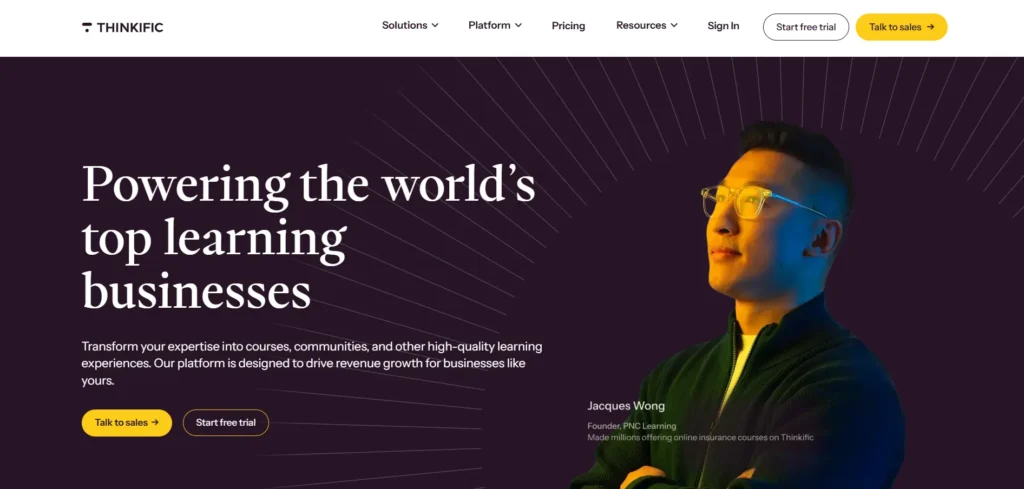
Strengths: Thinkific offers a great mix of flexibility, ease of use, and scalability. You can create courses that include video, quizzes, assignments, and surveys.
Its marketing tools, including landing page creation and email integrations, are also impressive. Thinkific is ideal for creators who need an all-in-one solution for course creation, delivery, and marketing.
Trade-offs: Some of Thinkific’s higher-end features are locked behind premium plans, and it can feel a bit rigid in terms of course customization.
2. Teachable
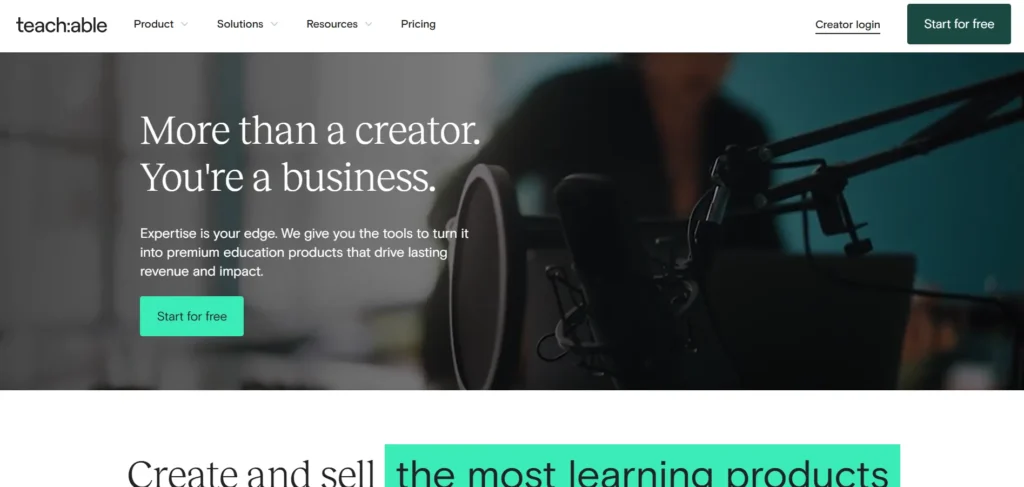
Strengths: Teachable’s user interface is clean and easy to use, making it ideal for beginner course creators. It supports videos, quizzes, and course certificates. Teachable’s pricing is also quite competitive compared to other platforms.
Trade-offs: The platform’s customization options are limited unless you use the higher-tier plans. It also lacks advanced marketing tools compared to some of the other platforms.
3. Kajabi

Strengths: Kajabi offers all-in-one features that include website building, email marketing, sales funnels, and more.
It’s a strong option for creators who want to bundle all their services in one platform. Kajabi is perfect for those looking for an integrated, scalable solution.
Trade-offs: It’s more expensive than many other tools, and you may find it to be overkill if your needs are more basic. Some users also report that the platform is not as flexible in terms of course customization.
4. LearnWorlds
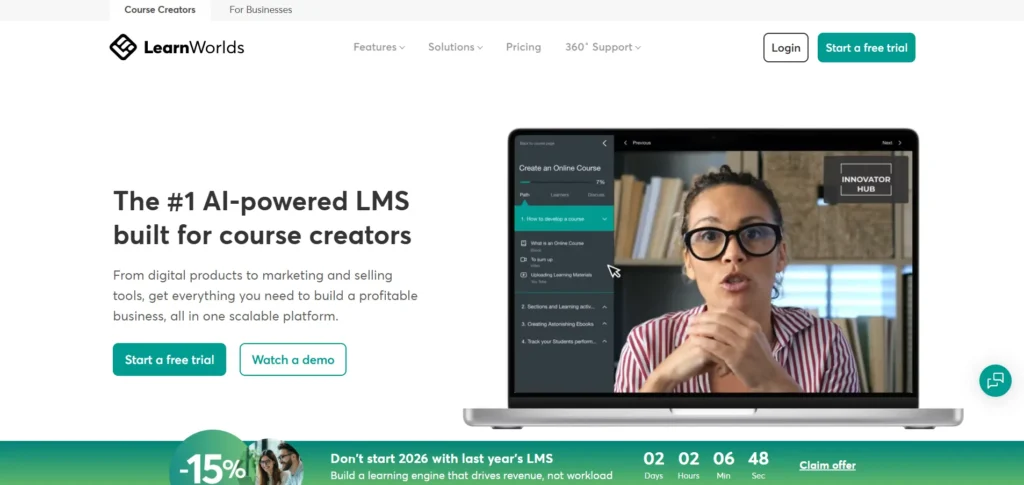
Strengths: LearnWorlds shines when it comes to interactive content. It offers extensive customization and allows for video-based content with lots of interactive features. It also has strong analytics tools to track student progress.
Trade-offs: Some users find it harder to get started with LearnWorlds due to its steep learning curve. Pricing can also become more expensive as you add more students or features.
5. Kartra
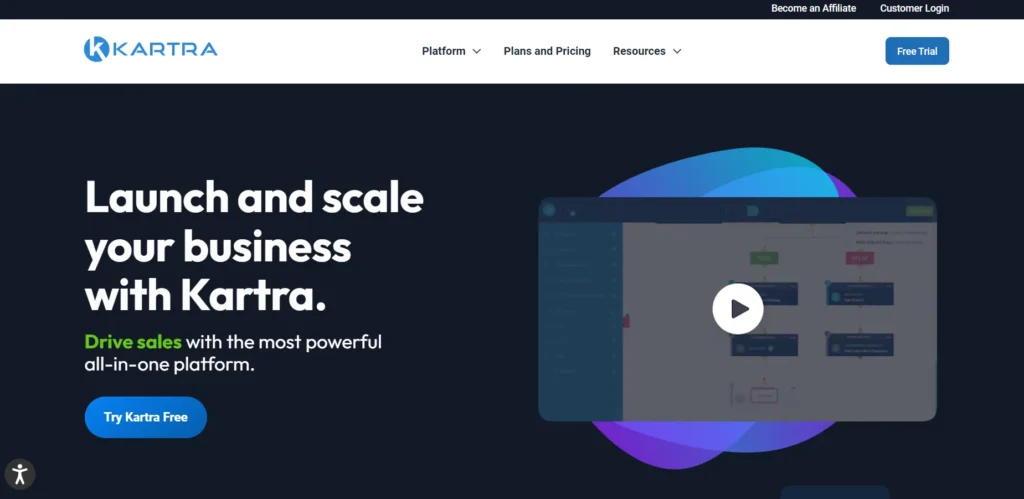
Strengths: Kartra is an all-in-one platform for building courses, sales funnels, and email marketing campaigns. It excels in automation and has powerful features for marketing and managing students.
Trade-offs: The course creation features are not as specialized as those of dedicated course platforms like Teachable or Thinkific. Kartra also has a steep learning curve.
How to Choose the Right Platform
Choosing the best course platform ultimately depends on your specific needs. Here’s a simple framework to help you decide:
- Assess your course type: Are you offering primarily video-based content, or will your students need a more interactive learning experience?
- Define your goals: Do you want to market and sell your courses directly, or do you prefer working within an established marketplace?
- Test platforms: Try the free trials to see how the platform feels. Does it meet your expectations for course creation, student engagement, and marketing tools?
- Consider growth potential: Can the platform scale with your business? Check pricing plans, student limits, and future expansion possibilities.
- Read reviews: See what other users are saying. Look for feedback on customer support, reliability, and how easy it is to use the platform over time.
FAQs
What’s the difference between course platforms and marketplaces like Udemy?
Course platforms are tools that allow you to create, host, and sell your courses independently, whereas marketplaces like Udemy provide built-in audiences but take a percentage of your earnings.
Can I migrate my course content later?
Some platforms make it easy to export your content, while others lock you into their system. Always check the platform’s export options before committing.
Do I need to know coding to use these platforms?
Most popular course platforms are designed to be user-friendly, with drag-and-drop builders that require no coding. However, more advanced features and customizations may require technical knowledge.
Is it better to have an all-in-one platform?
All-in-one platforms can simplify your workflow since they consolidate various tools (website, email, payment, etc.), but they can be more expensive and less flexible compared to specialized platforms.
Can I sell my course on multiple platforms at once?
Yes, you can sell your course on multiple platforms, but this may require additional tools or integrations. Some platforms allow you to sync content across multiple locations.