
The demand for digital skills has never been higher, and IBM has stepped up with a range of online courses designed to help learners keep pace with today’s fast-changing tech landscape. Whether you’re a beginner exploring data science for the first time or a professional looking to upgrade your expertise in artificial intelligence, cloud computing, or cybersecurity, IBM’s online learning programs offer structured, practical, and flexible options to fit different goals.
Through its platforms—primarily IBM SkillsBuild and Coursera—IBM delivers high-quality courses developed by experts who understand real-world business and technology needs. These programs combine theoretical knowledge with hands-on projects, giving learners a chance to apply concepts to real data, tools, and systems used in industry. In addition to learning technical skills, students can earn professional certificates that carry IBM’s global reputation, which can be a valuable boost when applying for jobs or seeking career advancement.
What makes IBM’s online courses stand out is their focus on employability. The curriculum isn’t just academic—it’s built to match current market demands, with clear pathways that lead from learning to practical application. For anyone looking to future-proof their career or pivot into tech, IBM’s online courses provide an accessible and well-recognized starting point.
Overview of IBM Online Courses
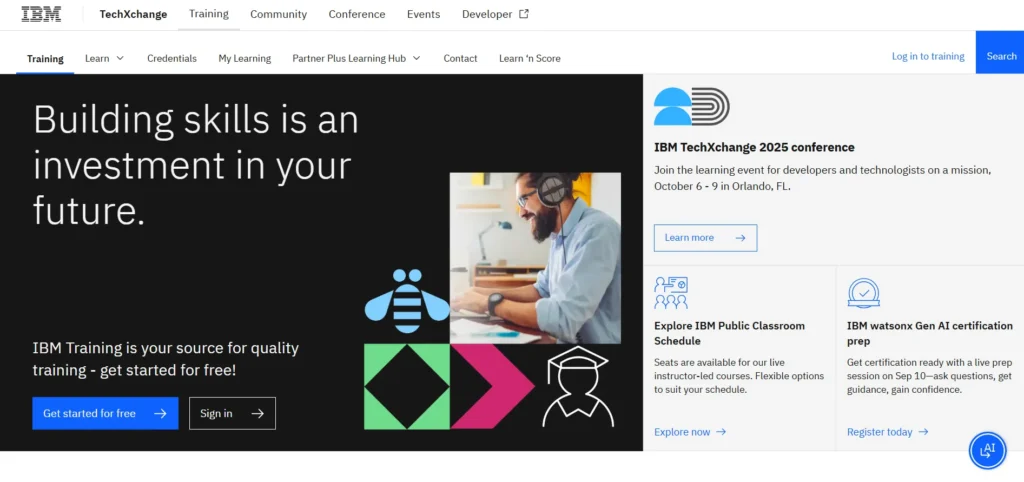
IBM offers two main routes for online learning: SkillsBuild, its free skilling platform, and its structured courses (often “Professional Certificates”) delivered via partner platforms such as Coursera. SkillsBuild is intended for mass upskilling and includes free modules, digital credentials, and a wide library of courses.
Meanwhile, IBM’s courses on Coursera or similar platforms tend to be more formal, modular, and certificate-driven. Many learners enroll in those to gain recognized credentials that may support a job change or portfolio build.
The goal is clear: help people acquire in-demand technical skills (Python, SQL, ML, cloud, cybersecurity, etc.) paired with credentials that carry the IBM brand. But how well this goal is met depends a lot on your level, expectations, and commitment.
Features of IBM Online Courses
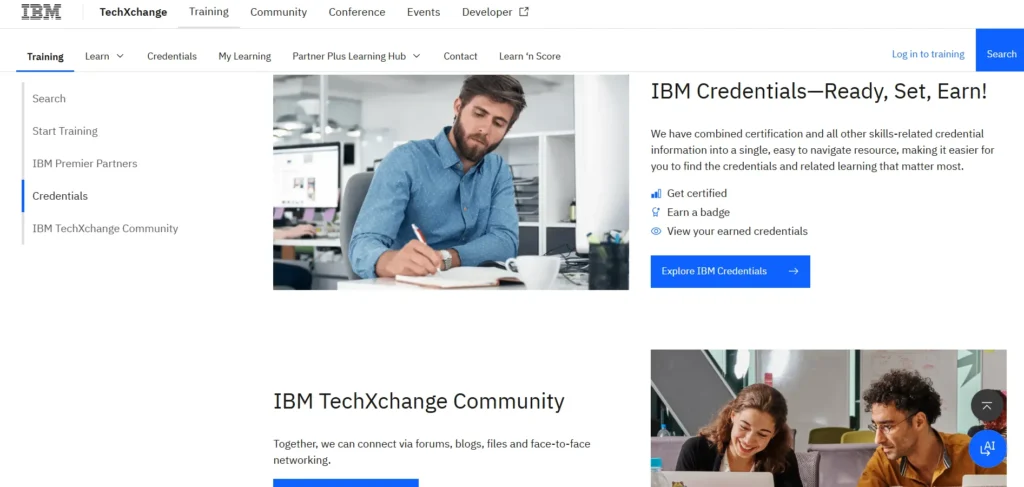
Here’s a breakdown of the key strengths (and some weaknesses) of IBM’s online offerings.
1. Industry-Relevant Content
One of the consistent positive remarks is that IBM designs its curriculum around current industry needs. Many courses are closely aligned with what job postings list — tools, languages, frameworks that are in demand. For example, their Data Science Professional Certificate covers Python, SQL, machine learning, data visualization — all staples in data roles.
Reviewers say this helps for junior roles: you’re not learning toy problems or obsolete tools. You get to see things people actually use. That said, for more advanced learners, parts of the curriculum can feel too introductory or basic. Some modules may not go into deep depth.
2. Hands-On Projects and Labs
This is one of IBM’s strongest claims — and also one of the most contested features. The inclusion of labs, assignments, and capstone projects gives learners chances to build something real, not just watch lectures or read slides. Many learners mention that these projects help them show something concrete (e.g. on GitHub) to recruiters or in interviews.
But there’s a catch: lab environments sometimes have technical issues. Some students report that dependencies are broken, configurations don’t load, or the environment disallows necessary installations. In one Reddit post, a user said that labs “would fail to run… they wouldn’t let you pip install.” Others say parts of the code are left unexplained, forcing them to figure it out themselves. That can be frustrating, especially for beginners.
So the hands-on parts are valuable — when they work well. But you should be prepared to spend extra time debugging or seeking help.
3. Flexible Learning Options
Because many IBM courses are offered via partner platforms and are self-paced, you can learn on your own schedule. You don’t have to be online at fixed times. This is especially helpful if you’re working or have other obligations. Several reviews praise that flexibility.
However, in many of the formal courses you pay monthly. If you drag things out, your cost rises. Also, self-paced learning demands a high degree of self-discipline; if you procrastinate, you might pay more or drop off.
4. Expert Instructors
IBM often uses in-house experts, data scientists, engineers, or those associated with IBM’s labs to teach or design courses. That lends credibility. Many modules are taught or curated by professionals in their field. For learners, this means you’re (theoretically) getting material that is relevant, up to date, and informed by real practice, not just academic theory.
Still, “expert” does not always mean “excellent teacher.” Some learners say the presentation style is basic: slides with narration, little storytelling, or minimal explanation for complex pieces. So the instructor’s name may carry weight more than their teaching style.
5. Certification and Career Services
One of IBM’s big selling points is the certificate or credential you get after completing a course or program. These often carry the IBM or IBM Skills Network branding. Some courses also open doors to IBM’s talent network or job referrals.
From a resume perspective, having an IBM certificate can give a slight credibility boost — especially if you’re early in your career. But many experienced hiring managers emphasize what you did (projects, portfolio) more than what certificates you hold.
On the community side, IBM tries to offer support networks, forums, peer reviews, and sometimes mentor help. But opinions vary on how active or responsive those are in practice.
6. Scalable Learning Paths
IBM’s course lineup is broad. They offer learning paths that scale — from beginner to intermediate to “specialization” levels. You can start with foundational modules and then pick more specialized electives in AI, cloud, or cybersecurity. This gives a kind of staircase pathway.
Yet, because some core modules are shared across multiple paths, you might find overlap or repetition if you enroll in several. Also, the transition from beginner to advanced is not always smooth. The jumps can feel abrupt.
7. Supportive Learning Community
To supplement the course content, IBM offers forums, peer groups, discussion boards, and sometimes mentoring. Community interaction helps when you’re stuck or want alternate explanations. Some learners say these forums saved them time when labs failed or concepts were vague.
However, community strength varies by course. Some forums are very active, others are sparse. Responsiveness from staff can also lag. In peer-reviewed assignments, you rely on other learners for feedback, which can be inconsistent.
Courses Offered by IBM
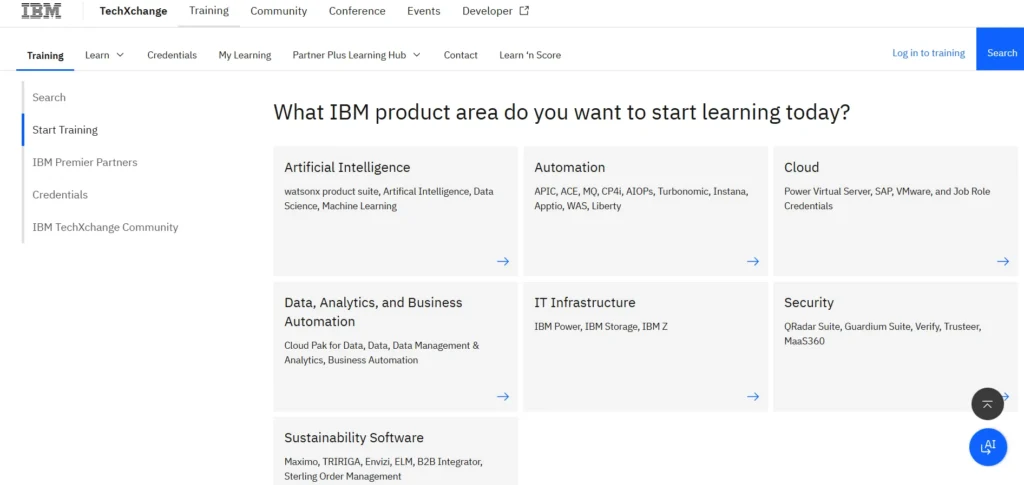
IBM covers a wide spectrum. Below are the main fields and what to expect in each.
1. Data Science and Analytics
This is one of IBM’s flagship areas. Their Data Science Professional Certificate is a popular choice, especially for beginners. It walks you through tool use, Python, SQL, data cleaning, modeling, visualization, and ends with an applied capstone. Many learners say it’s a solid introduction to the field.
One reviewer noted the program includes 10 courses and is “beginner-friendly… helps you build job-ready skills.” Others suggest that while it’s strong for starting out, advanced learners may find it lacking in depth.
2. Artificial Intelligence and Machine Learning
IBM offers courses targeting AI engineering, ML, neural networks, deep learning, and models for generative AI. From the Coursera listings, they have “IBM AI Engineering Professional Certificate” and related programs. These courses often layer on top of the data science core, introducing more specialized tools (e.g. TensorFlow, PyTorch, model deployment).
These tend to attract learners who already have basic programming or data knowledge, since the material becomes more technical and conceptually challenging.
3. Cybersecurity
IBM’s cybersecurity tracks focus on incident response, network security, threat detection, governance, and risk. These are more systems and infrastructure oriented, with labs on firewalls, security configurations, etc. For people interested in defensive security or IT security, this is a logical path.
Because security demands hands-on work, the lab environments and simulated setups become especially crucial here — and also particularly susceptible to environment glitches or resource limits.
4. Cloud Computing and Development
This includes topics like cloud architecture, virtualization, containers, microservices, API development, DevOps practices, and full stack application building. IBM often uses its own cloud infrastructure, or hybrid environments (IBM Cloud, Kubernetes setups). These courses teach you not just how to write code, but how to deploy, scale, and maintain it in production-style environments.
5. Project Management
IBM also offers modules on project management, agile frameworks, process management, and business analysis. These tend to be less technical but crucial for bridging the gap between tech and business. If you’re trying to move into roles like product management, business analysis, or tech leadership, these courses help you understand structure, communication, and planning.
Pricing
Pricing for IBM’s courses varies depending on whether you use free or formal tracks. Key points:
- SkillsBuild is largely free and offers digital credentials. Because it’s IBM’s own platform, many of its modules are open access.
- Professional Certificates (on Coursera or similar platforms) typically require a monthly subscription fee. For instance, the IBM Data Science Professional Certificate may cost around USD 49 per month. If you follow the recommended pace (say 5 months), the total cost becomes significant.
- Because you pay monthly, dragging out your timeline increases cost.
- Many courses allow auditing (accessing worksheets and videos) for free, but you won’t receive full certificate access, peer reviews, or graded assignments unless you pay.
- Sometimes there are discounts, scholarships, or financial aid especially through platforms like Coursera.
So, while the barrier to entry is moderate (not extremely pricey compared to bootcamps), costs can add up if you’re slow or juggling other commitments.
Pros and Cons of IBM Online Courses
Here’s a more distilled overview of what works well and what doesn’t.
Pros
- Recognized Certifications: An IBM certificate carries strong industry credibility. It’s a respected credential that can help professionals move forward in their current roles or transition into new fields.
- Relevant and Updated Content: IBM’s courses are built around current industry standards, ensuring that what you learn matches today’s technology trends and employer needs.
- Practical Learning Experience: The inclusion of labs and real-world projects helps learners gain practical, job-ready skills. You don’t just study theory — you get to apply what you learn in realistic scenarios.
- Flexible Study Schedule: Since the courses are self-paced, learners can study at their own convenience. This flexibility makes it easier for working professionals or students to manage learning alongside other commitments.
- Career Support: IBM offers career services such as resume reviews and interview preparation, which can make the transition from learning to employment smoother.
Cons
- Significant Time Requirement: Although self-paced learning is flexible, completing IBM’s professional certificates can take several months. Learners with limited time may find it difficult to stay consistent.
- Challenging Platform Navigation: Some users mention that navigating platforms like Coursera or edX can be confusing at first. While not a major issue, it can slow progress for those new to online learning.
- Limited Instructor Interaction: Direct access to instructors is minimal. Most engagement happens through forums and peer discussions, which may not suit learners who prefer one-on-one guidance.
Conclusion
If you are a beginner or even someone with modest experience looking to get a solid footing in data, AI, cloud, or cybersecurity — IBM’s online courses can be a good starting point. You’ll learn real tools, earn a recognized certificate, and build a portfolio of project work.
But don’t expect this to replace advanced mastery — you’ll likely need to supplement with deeper resources, side projects, or more focused learning. Be ready to troubleshoot labs yourself, push through ambiguous material, and not rely entirely on the teaching polish.
If you’re disciplined, curious, and willing to dig in, IBM’s courses offer a useful path. If you’re seeking ultra high specialization out of the box, or expecting flawless hands-on environments, they may feel limiting.
FAQs
Is IBM’s certificate enough to land a job?
Not on its own. Many learners and hiring managers emphasize your portfolio, project work, and ability to demonstrate skills more than the certificate. The credential can help get attention, but you should back it with real evidence of what you can do.
Can intermediate or advanced learners benefit?
Yes — but expect overlap in early modules and possibly needing external resources for tougher topics. The courses are designed mostly to ramp up learners, so depth in advanced areas may be limited.
What if labs fail or environment is glitchy?
This is one of the known pain points. You may need to lean on forums, peer discussion, or run parts on your local machine when possible. Being comfortable debugging is a plus.
How much time should I commit?
You’ll do best if you treat it like a part-time job — 10 to 15 hours a week usually helps you finish in a few months. Going slower increases risk of losing momentum and boosting cost.