
In recent years, online learning platforms have transformed how we acquire new skills. With the rise of remote work and the growing demand for upskilling, platforms like Udemy and Pluralsight have become prominent names in the online education landscape.
Both platforms offer a vast array of courses, but they cater to different audiences, learning styles, and purposes. This article provides an in-depth comparison of Udemy and Pluralsight, highlighting their unique features, strengths, and weaknesses.
Whether you’re an individual looking to enhance your skills or a business aiming to train your employees, this guide will help you choose the right platform for your needs.
Overview of Udemy

Udemy was founded in 2010 and quickly became one of the most popular online learning platforms. It boasts an extensive catalog of over 210,000 courses in various fields such as business, technology, health, marketing, music, and personal development. What makes Udemy particularly appealing is its accessibility to both learners and instructors. Anyone can create and sell a course on the platform, which has resulted in an enormous variety of courses at various price points.
Key Features of Udemy:
- Large Course Catalog: With more than 210,000 courses, Udemy offers a vast range of learning opportunities.
- Affordable Pricing: Udemy operates on a pay-per-course model, and frequent sales often make courses available for as low as $10 to $15.
- Lifetime Access: Once you purchase a course, you get lifetime access, which means you can go back to the content anytime you need a refresher.
- Self-Paced Learning: Udemy courses are available for you to take at your own pace. You can start, stop, and replay lessons whenever you like.
Overview of Pluralsight
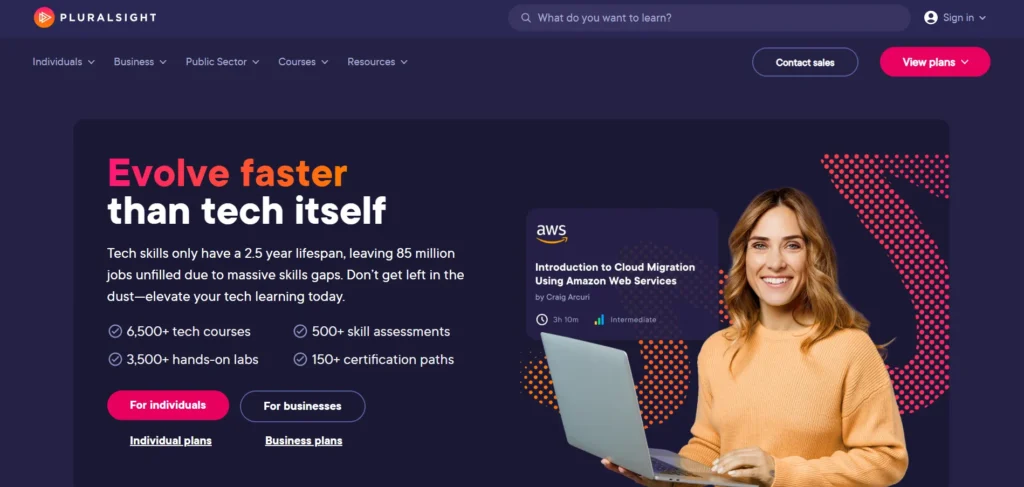
Founded in 2004, Pluralsight is a platform primarily focused on providing high-quality technical training. It has become a go-to platform for professionals looking to improve their skills in areas like software development, IT operations, cloud computing, cybersecurity, and more. Unlike Udemy, which offers courses across various fields, Pluralsight concentrates its efforts on tech and creative content.
Key Features of Pluralsight:
- Specialized Course Offerings: Pluralsight focuses on technology, software development, and creative topics, offering over 7,000 courses.
- Subscription-Based Model: Pluralsight operates on a monthly or yearly subscription model, allowing unlimited access to the entire course catalog.
- Interactive Learning: With features like coding challenges, assessments, and hands-on labs, Pluralsight allows for a more interactive learning experience.
- Skills Assessments: Pluralsight provides skill assessments that help learners gauge their proficiency and track their progress.
Course Variety and Quality: Udemy vs Pluralsight
Udemy’s Course Variety
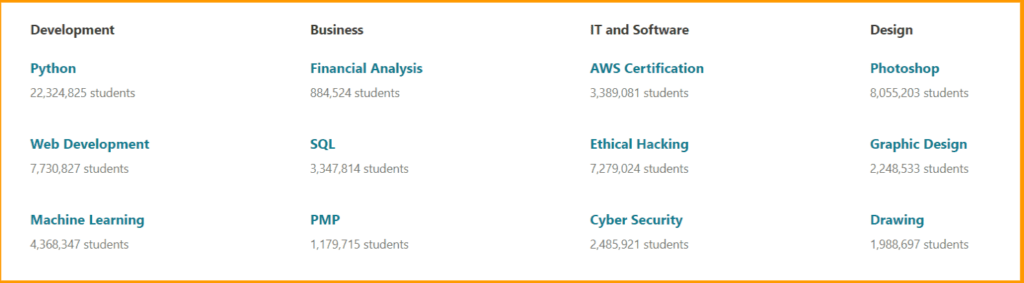
One of the most appealing aspects of Udemy is its extensive variety of courses. Whether you’re interested in programming, photography, writing, or fitness, you’ll find numerous courses to suit your needs. However, while the sheer variety is an advantage, it comes with certain downsides. Since anyone can create and sell courses on Udemy, the quality of these courses can vary significantly. Some courses are highly rated and well-structured, while others might lack depth or professional polish.
Quality Control on Udemy:
- Course Ratings and Reviews: Before enrolling in a course, it’s important to check its ratings and reviews. Most Udemy courses allow learners to rate the content and provide detailed feedback. This helps you gauge whether the course is worth your time and money.
- Instructor Credentials: While many instructors on Udemy are experts in their respective fields, some may not have formal credentials or teaching experience. You should always verify the instructor’s background before committing.
Pluralsight’s Course Quality
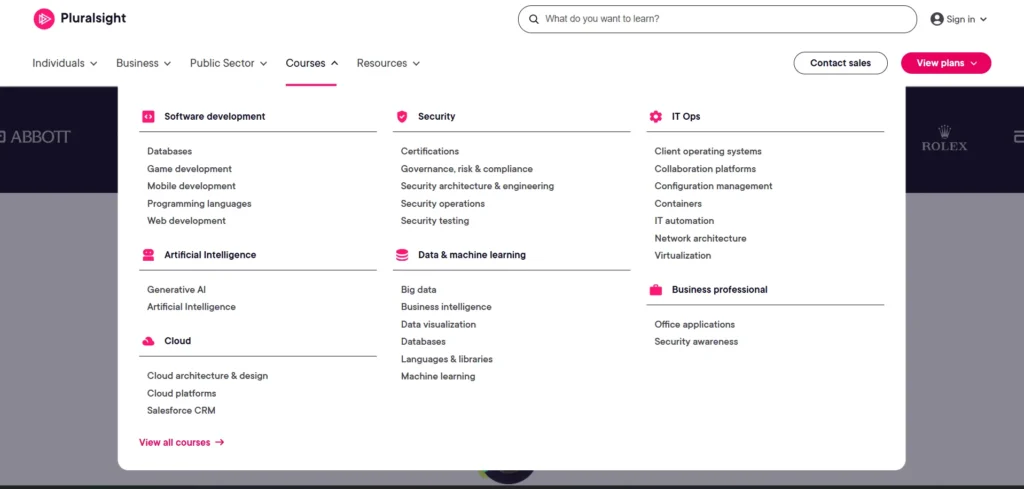
In contrast, Pluralsight offers a more controlled environment. All of the courses on the platform are created by industry professionals who have expertise in their fields. As a result, the courses are generally of higher quality, especially when it comes to technology-related content. Pluralsight collaborates with experts from leading tech companies like Microsoft, Google, and Amazon to ensure that its course offerings are up to date and relevant to the current industry landscape.
Advantages of Pluralsight’s Quality Control:
- Industry Experts: The platform’s partnerships with renowned tech companies ensure that the courses are taught by experienced professionals with real-world experience.
- Regular Updates: Pluralsight consistently updates its content to reflect the latest industry trends and technologies.
- Accreditation: While Pluralsight doesn’t offer formal degrees or certifications, its content is recognized by professionals and organizations as being high-quality and relevant.
Learning Paths and Structure: Which is Better?
Udemy’s Flexibility
Udemy is often praised for its flexibility. With over 210,000 courses available, learners have the freedom to choose their learning paths. This can be a double-edged sword, however. While the variety is appealing, it also means that there is no formal structure. If you’re not sure where to start, you might feel overwhelmed by the sheer number of options. Udemy doesn’t provide a formal learning path, so learners must curate their learning experience by picking courses based on their preferences.
Pluralsight’s Structured Learning Paths
Pluralsight, on the other hand, provides a more structured approach to learning. The platform offers curated learning paths, which are specifically designed to help learners progress from one skill level to the next. Whether you’re looking to become a certified cloud engineer or learn a new programming language, Pluralsight’s learning paths will guide you through the entire process.
These learning paths are particularly helpful for professionals who want a clear roadmap to follow. Pluralsight offers several learning paths for beginner, intermediate, and advanced levels, ensuring that each learner is placed on the right track based on their current knowledge and skills.
Hands-On Learning and Labs: A Practical Approach
Udemy’s Hands-On Opportunities

While Udemy provides video lectures, assignments, and quizzes, the level of hands-on experience can vary depending on the course. Some instructors include practical projects where learners can apply what they’ve learned, but many courses remain theoretical in nature. If you’re looking for hands-on learning opportunities, it’s important to choose courses that specifically highlight these elements in their descriptions.
Pluralsight’s Interactive Labs

Pluralsight excels in providing interactive labs and sandboxes, especially for tech courses. These features allow learners to practice in real-world scenarios, which can be particularly beneficial for those who want to develop practical skills. For example, if you’re learning cloud computing, Pluralsight’s labs let you work directly with cloud platforms like AWS or Azure to apply your knowledge.
Additionally, Pluralsight offers coding challenges and simulations, making it a highly interactive platform for learners who prefer a more hands-on approach. This emphasis on practical learning is one of Pluralsight’s standout features.
Pricing Models: Which Platform Offers Better Value?
Udemy’s Pay-Per-Course Model
Udemy operates on a pay-per-course model. Each course is priced individually, with the typical range being between $19.99 and $199.99. However, Udemy frequently offers discounts, so you can often purchase courses for as low as $10 to $15. This pricing structure can be highly cost-effective for learners who only need specific courses without committing to a subscription.
Once you purchase a course, you get lifetime access, meaning you can revisit the material at any time. This is especially beneficial if you need a refresher or want to review specific topics later.
Pluralsight’s Subscription Model
Pluralsight, in contrast, operates on a subscription-based model. Individual subscriptions start at $19 per month, and there are annual plans available that cost $159 per year. With a subscription, you gain unlimited access to the entire course catalog, which includes over 7,000 courses.
While this pricing model might seem more expensive upfront, it offers more value for learners who plan to take multiple courses. If you’re someone who is committed to continuous learning, a subscription to Pluralsight can be more economical in the long run.
Certification and Career Support: What Do You Get?
Udemy’s Certificates
Udemy offers certificates of completion for most courses, but these are not accredited. While you can use these certificates to showcase your learning, they may not carry much weight with potential employers. Udemy is more suitable for personal development or gaining a new skill, rather than for formal career advancement.
Pluralsight’s Career-Focused Features
Pluralsight also offers certificates of completion, but since the platform focuses on professional development, these certificates hold more weight in the tech industry. Additionally, Pluralsight provides skills assessments and allows you to track your progress, which can be useful for both personal growth and career advancement.
If you’re looking for more formal career support, Pluralsight is the better option. It offers learning paths specifically designed to help you achieve industry-recognized certifications in fields like cloud computing, cybersecurity, and software development.
User Experience and Interface
Udemy’s Simple Interface
Udemy’s user interface is straightforward and easy to navigate. The platform offers a search feature, allowing you to quickly find the courses you’re interested in. The course player itself is also user-friendly, with features like video playback speed adjustments, subtitle options, and progress tracking. However, the sheer volume of courses available on Udemy can sometimes make it challenging to find exactly what you’re looking for, especially if you’re unfamiliar with the platform.
Pluralsight’s Professional Interface
Pluralsight has a more professional-looking interface that is designed to cater to busy professionals. The platform’s layout is clean, with intuitive menus and easy navigation. Features like personalized dashboards, learning paths, and skill assessments make it easy for users to track their progress. If you’re someone who values a well-structured and easy-to-navigate platform, Pluralsight’s interface may be more appealing to you.
Mobile Accessibility: Learning on the Go
Both Udemy and Pluralsight offer mobile apps for learning on the go. Udemy’s app is highly rated and supports both iOS and Android devices. You can download courses for offline viewing, making it convenient for users who want to learn during commutes or travel.
Pluralsight also offers mobile apps, but they are more geared toward professionals who want to continue their learning on the move. The mobile experience on Pluralsight is similar to the desktop version, allowing you to pick up right where you left off.
Community and Support
Udemy’s Community
Udemy has a vast community of learners and instructors. The platform offers a Q&A section for each course, where you can ask questions and interact with instructors and fellow learners. However, the level of support you get depends largely on the instructor, as some are more engaged with their students than others.
Pluralsight’s Professional Community
Pluralsight’s community is more focused on professional development. The platform offers access to industry forums, expert instructors, and peer networks. If you’re looking for career-oriented support, Pluralsight’s community resources are more likely to meet your needs.
Conclusion: Which Platform is Right for You?
Choosing between Udemy and Pluralsight depends on your learning goals and budget. If you’re looking for an affordable way to acquire a broad range of skills in a self-paced manner, Udemy is an excellent choice. With its wide selection of courses and one-time purchase model, it’s perfect for those who are learning for personal growth or curiosity.
However, if you’re a professional aiming to enhance your expertise in technology or creative fields, Pluralsight offers a more structured and interactive learning experience. Its focus on professional development, certifications, and hands-on learning makes it a great option for those who are serious about advancing their careers.
Ultimately, both platforms have their strengths, and the right choice comes down to your learning objectives, preferences, and budget. Whether you’re pursuing a hobby or striving to advance in your career, both Udemy and Pluralsight offer powerful tools for your learning journey.
FAQs
What is the difference between Udemy and Pluralsight?
Udemy offers a wide variety of courses across many topics, while Pluralsight specializes in tech and creative fields, providing structured learning paths and hands-on labs.
Can I get a certificate from Udemy or Pluralsight?
Both platforms offer certificates of completion, but Udemy’s certificates are not accredited, while Pluralsight’s are more recognized in professional tech fields.
How much do Udemy and Pluralsight cost?
Udemy uses a pay-per-course model with prices ranging from $10 to $200, often discounted. Pluralsight operates on a subscription model, with individual plans starting at $19 per month.
Are the courses on Udemy and Pluralsight suitable for beginners?
Yes, both platforms offer courses for beginners, but Pluralsight’s curated learning paths make it easier to progress from beginner to advanced levels, especially in tech fields.
Can I learn offline on Udemy and Pluralsight?
Yes, both platforms offer mobile apps that allow you to download courses for offline learning.